


Managing cash flow is one of the biggest challenges that small businesses face. Cash flow is the amount of money that goes in and out of your business - the income you receive and the expenses you pay.
Cash flow is often described as the lifeblood of a business. Just like a car needs fuel to run, a business needs cash to operate. For example, without sufficient cash flow, salaries can’t be paid, supplies can’t be purchased, and everyday costs start to become difficult to meet.
It’s important to track your cash flow regularly. Doing this will help you pick up potential cash shortages and allow you to make adjustments early.
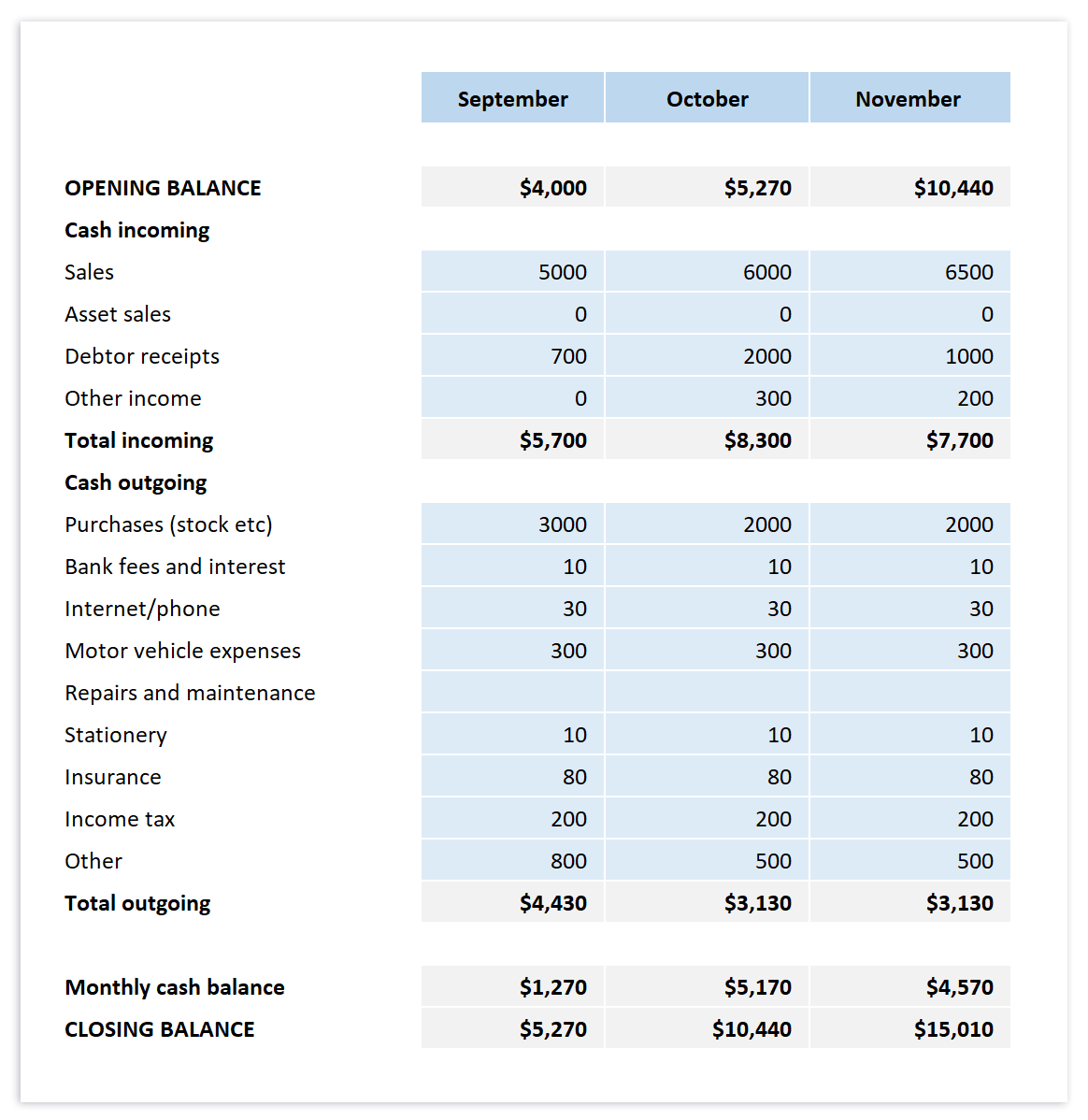
The following is an example of a simple 3-month cash flow statement from September to November. Key components of the statement include the:
- opening cash balance for each month
- total incoming amounts
- total outgoing amounts
- monthly cash balance
- closing balance for each month.
Incoming cash is broken down into sales, asset sales, debtor receipts and other income.
Outgoing cash is broken down into the typical outgoings that a business may have throughout the month. This will vary between businesses but may include outgoing amounts for stock purchases, bank fees, internet or phone expenses, car expenses, repairs, insurance, and money set aside for tax.
Digital cash flow tools
Digital accounting software and online cash flow apps and tools provide quick access to information on your cash flow position and make it easier for you to manage your cash flow. Some banks also have cash flow management tools and apps.
To learn more about managing your cash flow effectively, including where to download a simple cash flow statement, see the Quick links.
